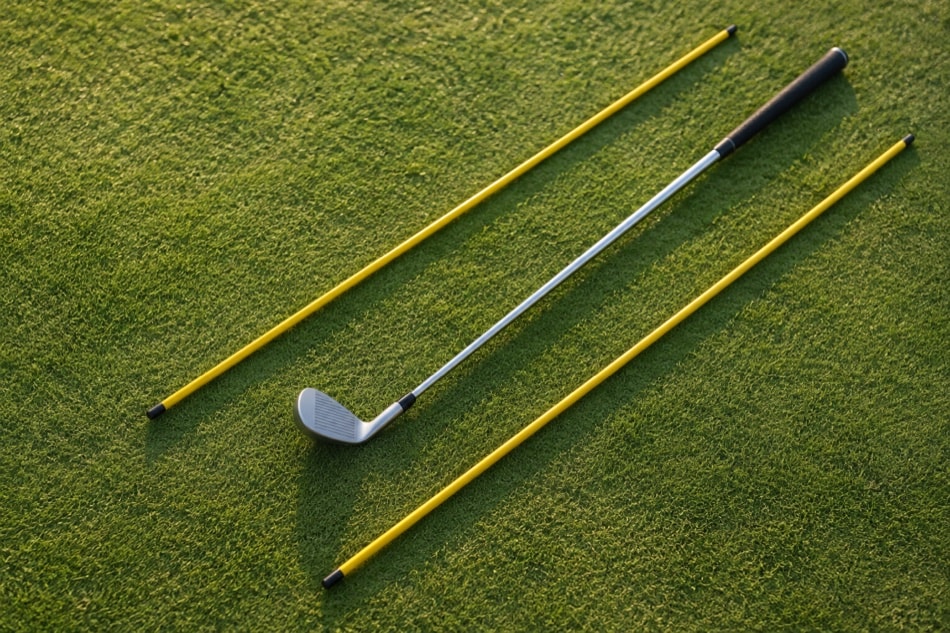
Plane is a useful map
Imagine an inclined surface running from the ball around your body. The shaft and clubhead move above, below and across that reference as the swing unfolds. The map helps describe tendencies, but the club moves in three dimensions and never stays on a literal sheet.
Use neutral feedback: where the ball began, how it curved, where the club met the ground and whether the finish was balanced. Those observations are more reliable than calling a swing good or bad because it felt familiar. A brief note after the session can preserve the pattern without turning practice into constant record keeping. Describe only what you could actually observe.
Different models can work
Some golfers lift the arms more, while others turn them more around the torso. Both patterns can strike the ball well when the face, path and body motion cooperate. A model becomes useful only when it explains your pattern and suggests a manageable change.
Rehearse the movement without a ball, then make a small shot and finally return to a normal swing. That progression gives the body time to organise the change while the real flight still has the final vote. If the full motion loses the idea, shorten it again instead of forcing a correction at speed. Gradual transfer is part of the work, not a retreat.
Check without posing
Record from directly behind the hand line and from face-on, keeping the camera stable and level. Look for broad tendencies across several swings. A single frame can mislead because speed, club choice and the shot being attempted all change the picture.
Avoid adding a second correction when the first attempt looks untidy. Golf learning is noisy, and one ball cannot settle the question. Look for a repeatable trend across an attentive practice block. Keep the target large enough that you can notice motion and contact without reacting to a narrow outcome. Precision can increase after the pattern becomes more dependable.
Notice steep and shallow patterns
A very steep delivery may produce pulls, cuts or heavy contact; a very shallow one may encourage blocks, hooks or contact low on the face. Those are clues rather than diagnoses. Clubface direction and strike location must be read alongside path.
Take the idea to the course as one short cue, not a technical speech. Choose the shot, make the rehearsal and commit. Save detailed diagnosis for a practice area where time and safety allow it. Between shots, let attention move to the walk, the surroundings and the next decision. Constant mechanical checking makes a round feel longer and rarely produces clearer information.
Give the club room
Better plane work often comes from improved posture, turn and transition rather than dragging the club onto a line. Rehearse slowly, let the hands respond to the body and keep enough space for the trail elbow to move without becoming trapped.
Give the idea a fair test with a familiar club and a comfortable target. Watch the ball's starting direction, curve and contact before changing anything else. A useful cue should make the pattern clearer, not make you chase a perfect position. Pause between attempts long enough to picture the next shot, and keep the setup consistent so the feedback has a stable reference.
Rules and research in context
A systematic review of golf-swing biomechanics in Sports discusses swing plane and kinematic sequence while also noting a lack of methodological consensus, a useful reason to avoid treating one model as universal.
Connect the work
Carry this idea into A pre-swing checklist: setup, alignment and posture, The transition: starting the downswing in sequence and Fixing common faults: the slice, the shank, thin and fat shots. The links between technique, practice and decisions are where a range change becomes a usable golf skill.