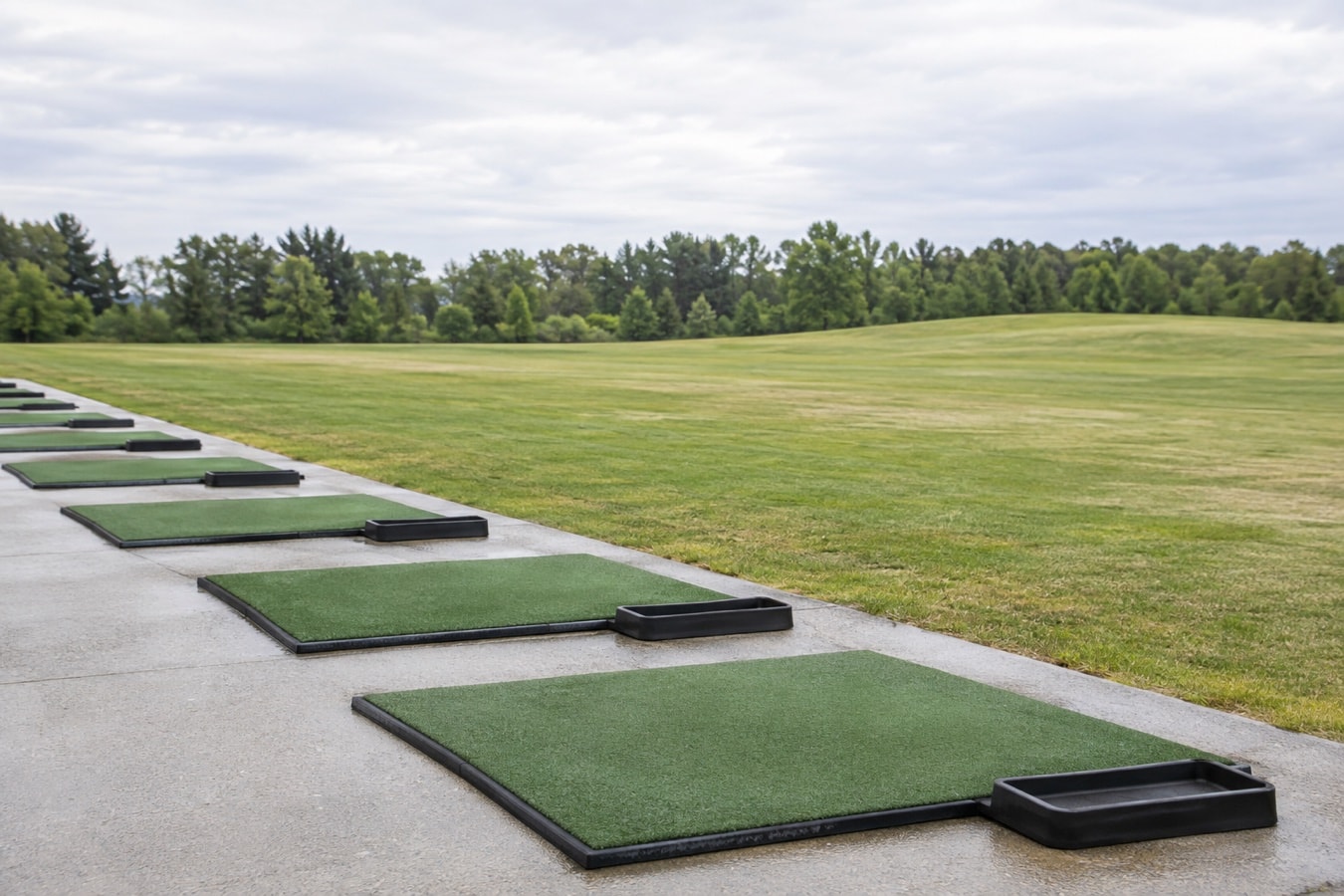
Know when repetition helps
Blocked practice gives repeated chances with the same task, which is useful while a movement is unfamiliar. Keep the target stable, move slowly and look for the intended contact. Once the pattern appears, change something so the skill must be recalled rather than copied.
Give the idea a fair test with a familiar club and a comfortable target. Watch the ball's starting direction, curve and contact before changing anything else. A useful cue should make the pattern clearer, not make you chase a perfect position. Pause between attempts long enough to picture the next shot, and keep the setup consistent so the feedback has a stable reference.
Add variety with purpose
Alternate clubs, trajectories and targets while retaining one theme. Variety should create decisions, not chaos. If every shot becomes unrelated, feedback disappears; if nothing changes, confidence may exceed what the course will support.
Begin below full speed so balance and strike stay visible. Repeat only while attention is sharp, then change the target or lie to learn whether the motion can travel. Keep the adjustment that improves the pattern without adding strain. When the result changes, ask whether the motion changed too or whether ordinary variation is appearing. That question prevents a quick reaction to every ball.
Turn targets into a score
Award a simple success for finishing in a chosen area, starting through a gate or leaving a putt within a useful circle. Decide the scoring before you begin and complete the game. The point is attention under consequence, not inventing a flattering result.
Use neutral feedback: where the ball began, how it curved, where the club met the ground and whether the finish was balanced. Those observations are more reliable than calling a swing good or bad because it felt familiar. A brief note after the session can preserve the pattern without turning practice into constant record keeping. Describe only what you could actually observe.
Use slow motion for clarity
A slow rehearsal reveals balance, order and clubface awareness that full speed can hide. Move continuously, pause only when the drill calls for it and then blend the feeling into a normal swing. Slow work should lead back to a real shot.
Rehearse the movement without a ball, then make a small shot and finally return to a normal swing. That progression gives the body time to organise the change while the real flight still has the final vote. If the full motion loses the idea, shorten it again instead of forcing a correction at speed. Gradual transfer is part of the work, not a retreat.
Try one-club problems
Play varied short shots with a single club, or imagine a hole on the range and change club after every ball. Constraints encourage creativity and expose gaps in decision-making. Finish with the shot you expect to face first on the course.
Avoid adding a second correction when the first attempt looks untidy. Golf learning is noisy, and one ball cannot settle the question. Look for a repeatable trend across an attentive practice block. Keep the target large enough that you can notice motion and contact without reacting to a narrow outcome. Precision can increase after the pattern becomes more dependable.
Rules and research in context
A systematic review of motor learning in golf in Sports Medicine - Open found support for external focus, contextual interference and errorless learning, while noting that most included studies used simple putting tasks with novices.
A putting study in Frontiers in Sports and Active Living found trivial differences between internal and external focus instructions but considerable improvement with practice across four days, a reminder not to make one cue carry too much weight.
Connect the work
Carry this idea into Keeping stats: measuring your game to improve it, Why golfers plateau — and how improvement actually happens and Getting good instruction: lessons, coaches and learning resources. The links between technique, practice and decisions are where a range change becomes a usable golf skill.