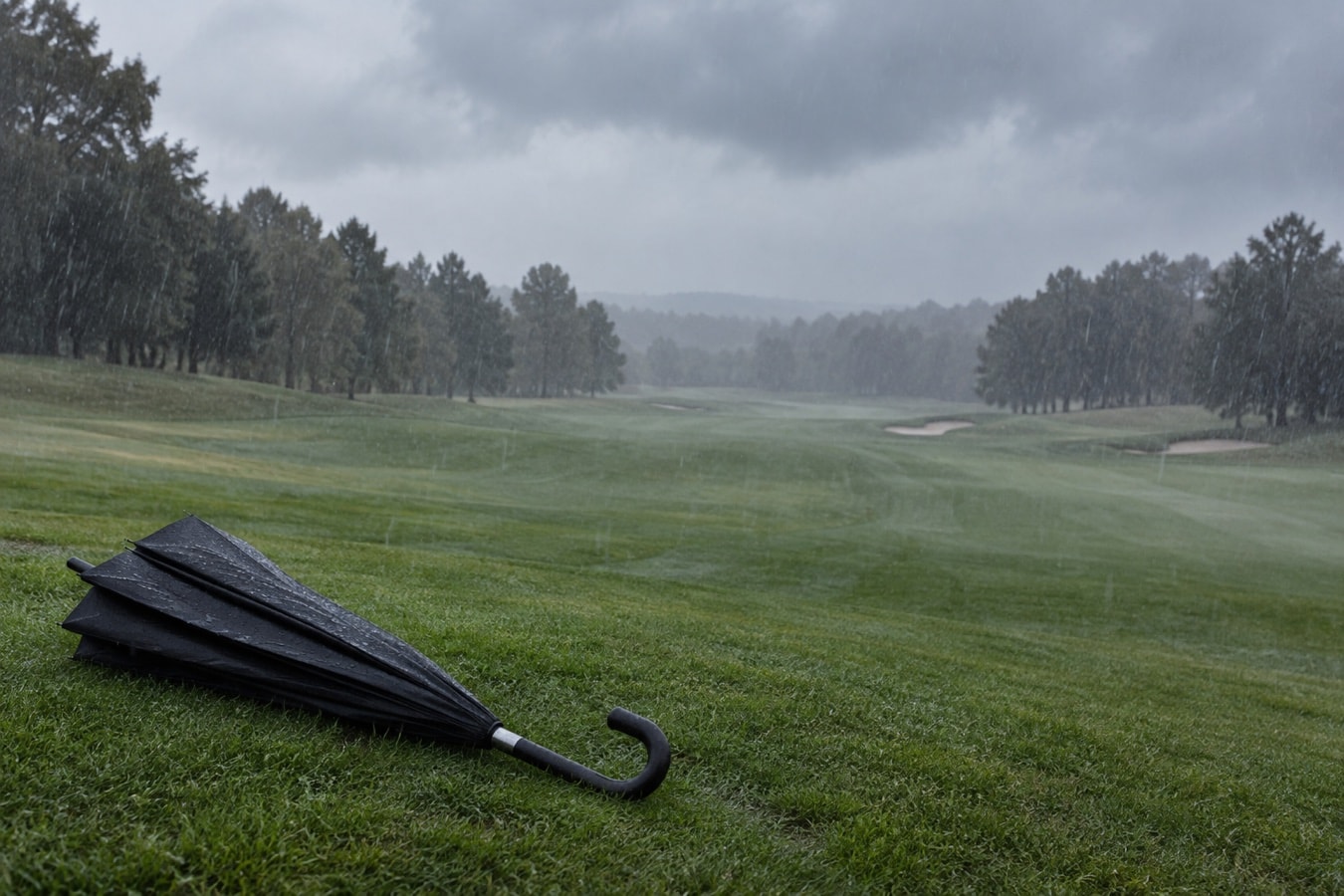
Layer for changing effort
Begin with a light layer that moves moisture away from the skin, add warmth that does not restrict the shoulders and carry a shell when needed. Test a full turn before leaving. Bulky fabric around the arms can change the swing.
Rehearse the movement without a ball, then make a small shot and finally return to a normal swing. That progression gives the body time to organise the change while the real flight still has the final vote. If the full motion loses the idea, shorten it again instead of forcing a correction at speed. Gradual transfer is part of the work, not a retreat.
Keep water away from the grip
Store a dry towel inside the bag cover or beneath the umbrella, rotate gloves if needed and keep club grips protected until the shot. Dry hands and grips support normal pressure; squeezing harder is a poor substitute.
Avoid adding a second correction when the first attempt looks untidy. Golf learning is noisy, and one ball cannot settle the question. Look for a repeatable trend across an attentive practice block. Keep the target large enough that you can notice motion and contact without reacting to a narrow outcome. Precision can increase after the pattern becomes more dependable.
Choose shoes for the ground
Traction should match wet, firm or sandy conditions without making the feet feel fixed. Check soles for wear and clear packed grass. Stable footing supports balance, but spikes do not excuse an aggressive swing from a slippery lie.
Take the idea to the course as one short cue, not a technical speech. Choose the shot, make the rehearsal and commit. Save detailed diagnosis for a practice area where time and safety allow it. Between shots, let attention move to the walk, the surroundings and the next decision. Constant mechanical checking makes a round feel longer and rarely produces clearer information.
Respect sun and heat
Use shade when available, wear suitable coverage and keep water accessible. Hot conditions can change concentration and pace, so notice how you feel and shorten or stop play when conditions or symptoms call for it.
Give the idea a fair test with a familiar club and a comfortable target. Watch the ball's starting direction, curve and contact before changing anything else. A useful cue should make the pattern clearer, not make you chase a perfect position. Pause between attempts long enough to picture the next shot, and keep the setup consistent so the feedback has a stable reference.
Thunder changes the plan
No place outside is safe in a thunderstorm, so stop and reach a large permanent building or a hard-topped metal vehicle with the windows closed. Small rain shelters and trees are not safe, and play should not resume until the full recommended interval has passed after the last thunder.
Begin below full speed so balance and strike stay visible. Repeat only while attention is sharp, then change the target or lie to learn whether the motion can travel. Keep the adjustment that improves the pattern without adding strain. When the result changes, ask whether the motion changed too or whether ordinary variation is appearing. That question prevents a quick reaction to every ball.
Rules and research in context
The US National Weather Service says no place outside is safe during a thunderstorm, identifies a substantial building or closed hard-topped metal vehicle as safer shelter and says to wait at least 30 minutes after the last thunder.
AAOS OrthoInfo describes common trouble areas for golfers and advises warming up before a round by moving the shoulders, back and legs before progressing from shorter clubs toward the driver.
MedlinePlus provides general reading on sun exposure and sunburn, useful background when planning clothing and shade for a long round.
Thunderstorm safety: No place outside is safe in a thunderstorm, so stop and reach a large permanent building or a hard-topped metal vehicle with the windows closed. Small rain shelters and trees are not safe, and play should not resume until at least 30 minutes after the last thunder.
Connect the work
Carry this idea into Food and water on the course, Planning a golf trip and Pace of play, etiquette and the spirit of the game. The links between technique, practice and decisions are where a range change becomes a usable golf skill.