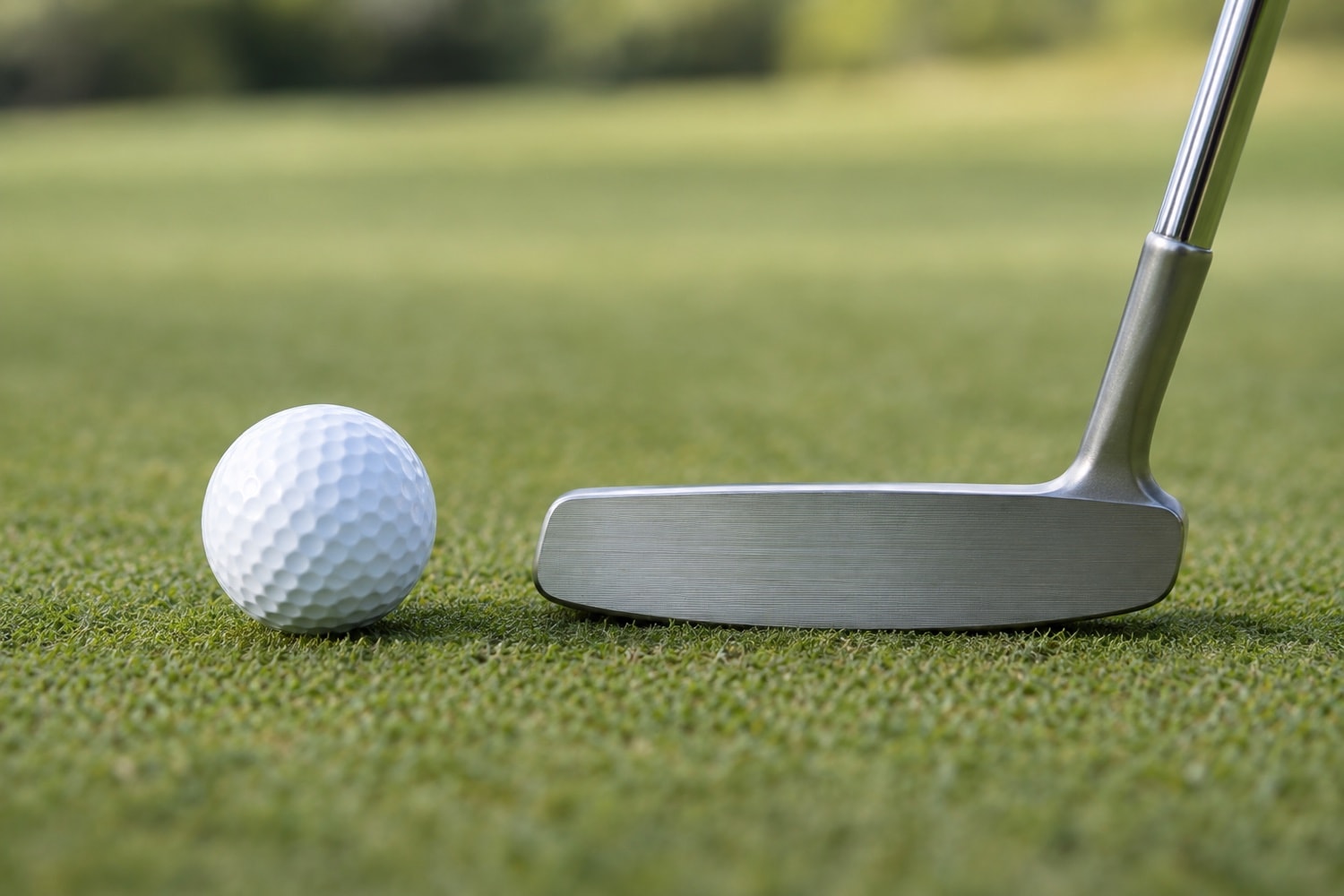
Set the eyes and shoulders quietly
Stand so the ball and intended start line are easy to see without twisting your neck. Let the arms hang, soften the elbows and arrange the shoulders roughly parallel to the line. Comfort and repeatability matter more than copying one posture.
Rehearse the movement without a ball, then make a small shot and finally return to a normal swing. That progression gives the body time to organise the change while the real flight still has the final vote. If the full motion loses the idea, shorten it again instead of forcing a correction at speed. Gradual transfer is part of the work, not a retreat.
Start the ball through a gate
A narrow gate placed a short distance ahead provides direct feedback on face direction. Roll putts through it at gentle pace and avoid following the ball with the head. Once the start line improves, vary distance while keeping the gate.
Avoid adding a second correction when the first attempt looks untidy. Golf learning is noisy, and one ball cannot settle the question. Look for a repeatable trend across an attentive practice block. Keep the target large enough that you can notice motion and contact without reacting to a narrow outcome. Precision can increase after the pattern becomes more dependable.
Read from low and high sides
Look at the overall slope before focusing on the final section near the hole. Notice where water would move, how your feet respond and whether the putt climbs or falls early. Choose a line and pace together; neither exists alone.
Take the idea to the course as one short cue, not a technical speech. Choose the shot, make the rehearsal and commit. Save detailed diagnosis for a practice area where time and safety allow it. Between shots, let attention move to the walk, the surroundings and the next decision. Constant mechanical checking makes a round feel longer and rarely produces clearer information.
Give attention a clear home
Settle your gaze on a small feature of the ball or the intended spot, then let the stroke happen. The aim is a quiet final look, not staring with strain. A stable visual routine can keep attention from jumping to outcome.
Give the idea a fair test with a familiar club and a comfortable target. Watch the ball's starting direction, curve and contact before changing anything else. A useful cue should make the pattern clearer, not make you chase a perfect position. Pause between attempts long enough to picture the next shot, and keep the setup consistent so the feedback has a stable reference.
Practise pace across changing lengths
Roll to the fringe or a tee rather than always to a hole. Change distance after each attempt and finish every stroke in balance. The challenge is to match the motion to the picture, not to reproduce one backswing length mechanically.
Begin below full speed so balance and strike stay visible. Repeat only while attention is sharp, then change the target or lie to learn whether the motion can travel. Keep the adjustment that improves the pattern without adding strain. When the result changes, ask whether the motion changed too or whether ordinary variation is appearing. That question prevents a quick reaction to every ball.
Rules and research in context
A study in the Journal of Applied Sport Psychology found that quiet-eye training within a pre-shot routine helped elite golfers retain putting control under anxiety, a narrow finding that supports a stable visual routine rather than a guarantee.
A putting study in Frontiers in Psychology linked practice strokes matched to the putt's actual distance with the best accuracy in that study, which is a good reason for a rehearsal to reflect the task.
Connect the work
Carry this idea into The short game: chipping, pitching and bunker play, Building a pre-shot routine and The mental game: focus, nerves and visualisation. The links between technique, practice and decisions are where a range change becomes a usable golf skill.